
Breaking the Digital Cage
Maybe it's time to transform our technological reality.

Our political moment is ridiculous. Donald Trump has been convicted of dozens of felonies and he'll probably be elected president again. Joe Biden belongs in a nursing home yet there are powerful forces conspiring right now to keep him in office for another 4 years. My favored candidate Robert F. Kennedy Jr. could also possibly end up winning, which would be extremely disruptive to business as usual. Much more disruptive than when Trump was first elected. That would have major upsides and major downsides.
Our economic moment is if anything more ridiculous. Corporate price gouging across the board and cartoonishly lavish government spending have sucked most of the purchasing power right out of our dollars. The credit system underpinning our economy is broken and racist. The entire legal system has been compromised by big business, making it impossible for small companies to compete.
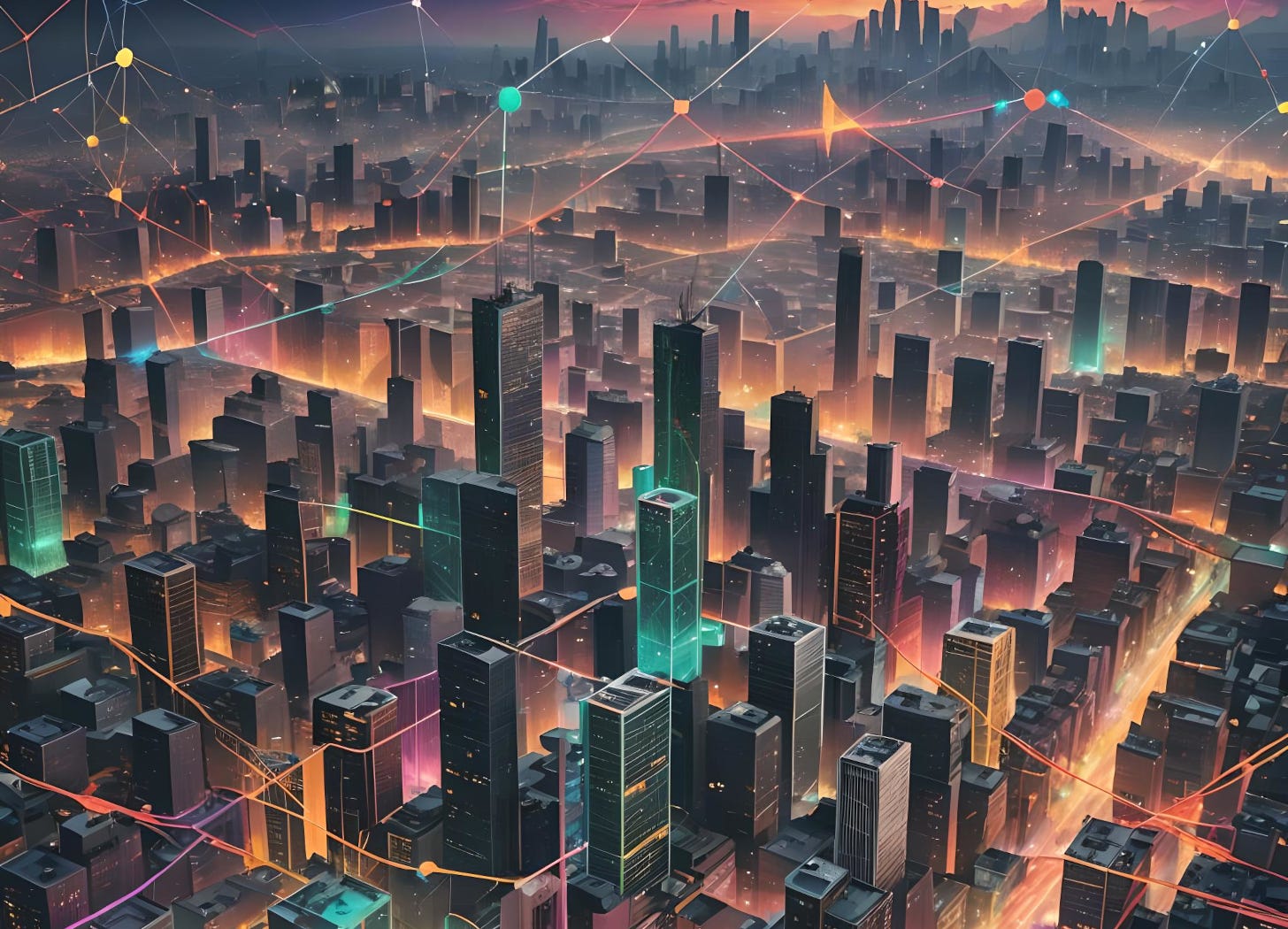
Our technological moment is a little more complicated. While technologies with the potential to transform society in positive ways are out there, most people are uninterested in developing and adopting them. Instead, we live in customized digital cages crafted for us by Big Tech. All of the information presented to us in these cages is status quo propaganda to some degree.
The Desert of the Real
Consider search. All of the major search engines are rigged to prevent us from accessing information that challenges the official story. This rigging of search has rendered the overwhelming majority of the internet completely invisible. Corrupted search censors the web to a disturbing extent. Here's a video that demonstrates how Google and Bing keep people focused on control regime messaging by preventing them from seeing complete search results.
Social media is even worse than search in terms of preventing us from finding anything that might expand our horizons. Not only do social media algorithms prevent dissenting voices from being heard, they categorically suppress news as a matter of course. And if a perspective challenges the status quo, social media censors the perspective by isolating the people trying to share it.
The vast majority of people rely on a combination search and social media for all of their information. There used to be physical places where people gathered to talk about the world and current events, but those places have disappeared in most parts of the country. This leaves us in a strange circumstance. The information we depend on to make sense of our reality is systematically manipulated while our voices are silenced by the machines that mediate our communications.
As they said in The Matrix, welcome to the desert of the real. The situation is dystopian, but there are things we can do to improve it. We can find ways to give people access to subversive information. We can create spaces for uncensored communication. And we can get better at making sense of what Big Tech is really up to.
Breaking the Digital Cage
Last week I introduced my new conspiracy news search app. More recently, I made a 9 min video about it. The video goes over instructions for making the most of the search features at WantToKnow.info where I work and explains how my app augments this functionality. Although the project is pretty fringe, it provides tools for serious conspiracy researchers that aren't available anywhere else.
The web should be filled with tools like this. Instead, it's filled with propaganda and advertising delivery systems powered by data harvesters. Why isn't there an open source web browser with open source search and built in decentralized social media? Why is so much data that's important to the public hidden in databases that can't easily be queried by public interest apps? Why isn't everyone using crypto instead of Zelle and Cashapp?
The answer to questions like these is that the vast majority of people have no idea how to think about our technological context. They underestimate the degree to which their digital cages control them and wouldn't even know where to look for information about what's now technologically possible. This is just as true of people in tech as it is for everyone else.
If we ever decide to break our digital cages, we'll have to start doing some things differently. If we want technology that genuinely serves society, we'll have to make it ourselves. We'll also have to convince others to use it instead of relying on the tech that the control regime wants us to use. These are major challenges, but they're not insurmountable. If we ever got serious about it, we could transform our technological reality very quickly.
For more of my writing, check out my scifi novels and my Hive blog.